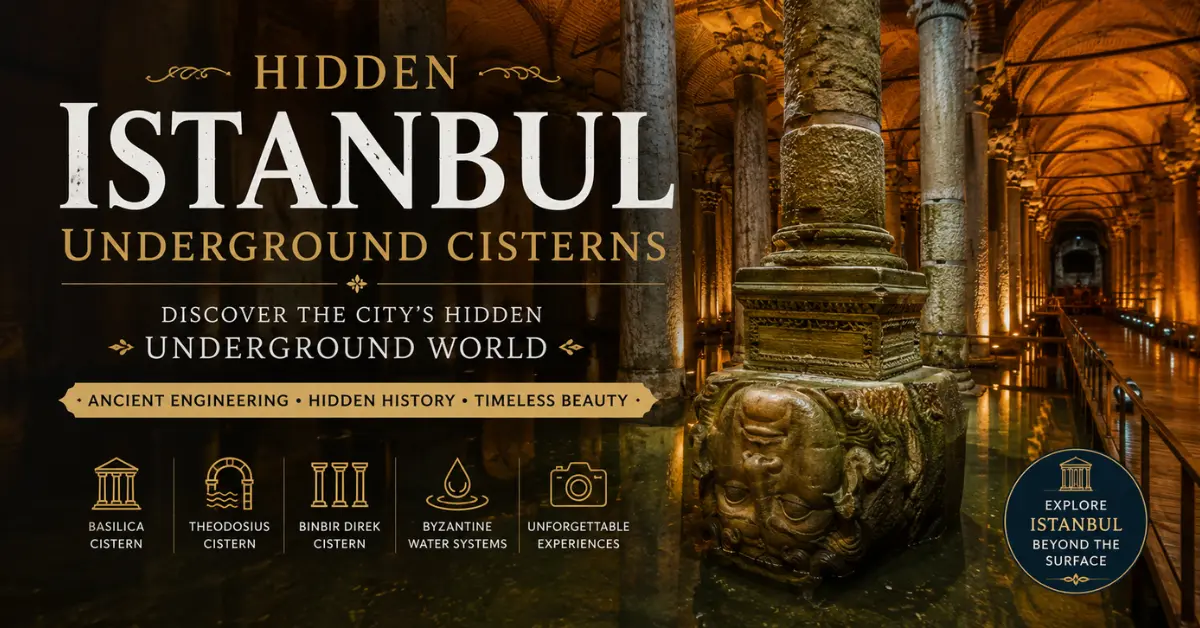




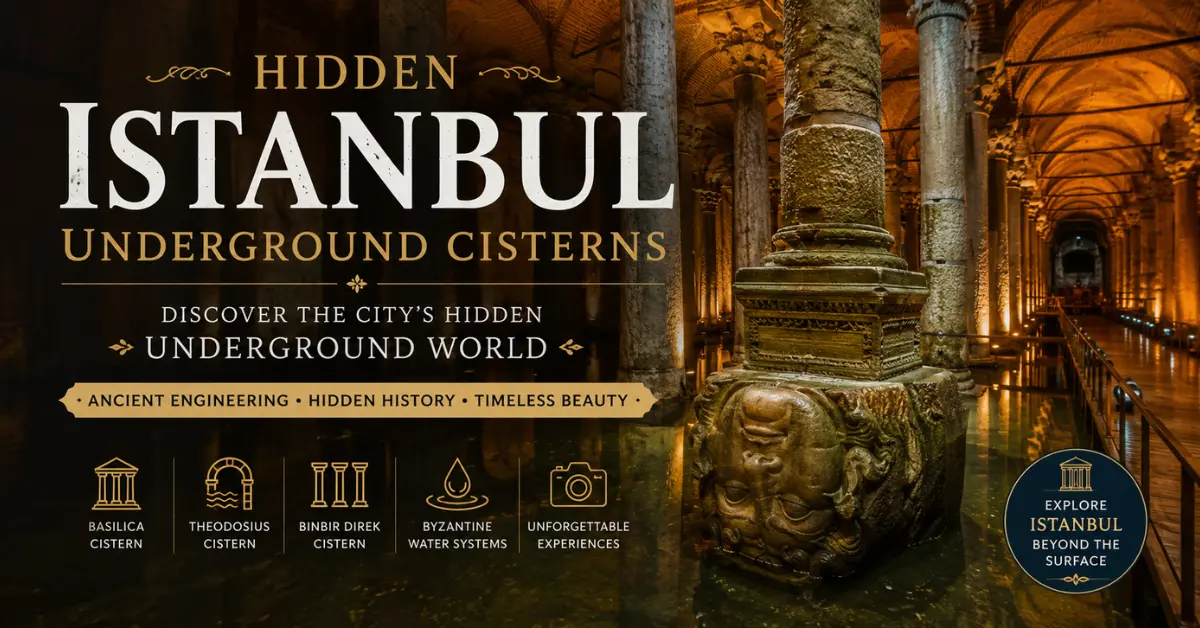
Hidden Istanbul
Historic Underground Tunnels and Secret Passages Beneath the City
When people think of Istanbul, they picture magnificent mosques, bustling bazaars, and the shimmering Bosphorus. Few realize that another Istanbul exists beneath the streets—a world of historic tunnels, underground corridors, ancient water systems, and hidden passageways built over centuries by the Byzantine and Ottoman civilizations.
Some of these underground structures once connected palaces, cisterns, fortifications, and public buildings. Others formed part of sophisticated water distribution networks that helped Constantinople survive wars, sieges, and droughts.
In this chapter of Hidden Istanbul, we explore the fascinating underground heritage that reveals another layer of the city’s remarkable history.
1. Basilica Cistern’s Hidden Passages
Beyond its famous columns and atmospheric lighting, the Basilica Cistern was once connected to an extensive water distribution system serving the Great Palace and nearby districts.
Although visitors cannot access these historic service corridors today, they illustrate the remarkable engineering of Byzantine Constantinople.
2. Theodosius Cistern
The restored Theodosius Cistern demonstrates how underground reservoirs were integrated into the city’s infrastructure.
Its impressive arches and stone columns offer a glimpse into the hidden engineering that supplied water throughout the capital.
3. Binbirdirek Cistern
One of Istanbul’s oldest underground structures, Binbirdirek Cistern reflects the scale of Byzantine construction projects.
Its vast interior once formed part of a larger network of underground water systems beneath the historic peninsula.
4. The Valens Aqueduct System
Although the aqueduct itself rises above ground, much of the water network continued below the surface through channels and underground conduits that distributed fresh water across the city.
This engineering system remained in use for centuries.
5. The Theodosian Land Walls
Archaeological research has revealed hidden chambers, service passages, and defensive spaces within sections of Istanbul’s ancient city walls.
These features highlight the sophisticated military planning of Byzantine engineers.
6. Underground Structures Around Topkapı Palace
The historic peninsula contains numerous archaeological remains beneath modern streets, including vaulted storage areas, water channels, and service corridors associated with successive civilizations.
Many remain protected as important archaeological sites.
7. Galata’s Historic Underground Cellars
Beneath Galata’s stone buildings are centuries-old vaulted basements and storage spaces once used by Genoese and Ottoman merchants.
These underground chambers supported the area’s role as one of the Mediterranean’s busiest trading districts.
Why Is Istanbul Full of Underground Structures?
For more than 2,000 years, Istanbul developed layer upon layer of history.
Every empire expanded the city’s infrastructure by building aqueducts, reservoirs, foundations, tunnels, and storage chambers beneath earlier settlements.
As a result, modern Istanbul preserves one of the world’s richest underground archaeological landscapes.
Travel Responsibly
Many underground structures are protected archaeological sites or remain closed to the public.
Visitors should only explore locations that are officially open and should always respect barriers, restoration work, and local regulations.
Responsible tourism helps preserve Istanbul’s remarkable underground heritage for future generations.
Discover the Hidden City Below Your Feet
Istanbul’s story is not only written across its skyline—it also lies beneath its streets.
From Byzantine water systems to hidden passageways and ancient engineering, the city’s underground world reveals an extraordinary chapter of history that many travelers never experience.
Continue exploring the Hidden Istanbul series to uncover forgotten landmarks, secret gardens, hidden cafés, breathtaking viewpoints, and many more places beyond the traditional tourist route.