




Hidden Istanbul
Underground Cisterns in Istanbul: Discover the City’s Hidden Underground World
Beneath the busy streets of Istanbul lies an extraordinary underground world that many visitors never see. Hidden below historic squares, ancient neighborhoods, and centuries-old buildings are massive Byzantine cisterns that once supplied water to one of the world’s greatest cities.
These underground reservoirs are among Istanbul’s most fascinating engineering achievements. Built hundreds of years before modern plumbing systems, they stored and distributed water to palaces, churches, public baths, and thousands of homes throughout Constantinople.
While the Basilica Cistern attracts millions of visitors every year, it is only one part of a much larger network of hidden underground structures waiting to be explored.
In this edition of Hidden Istanbul, we uncover the remarkable cisterns that reveal the city’s hidden history beneath your feet.
1. Basilica Cistern (Yerebatan Cistern)
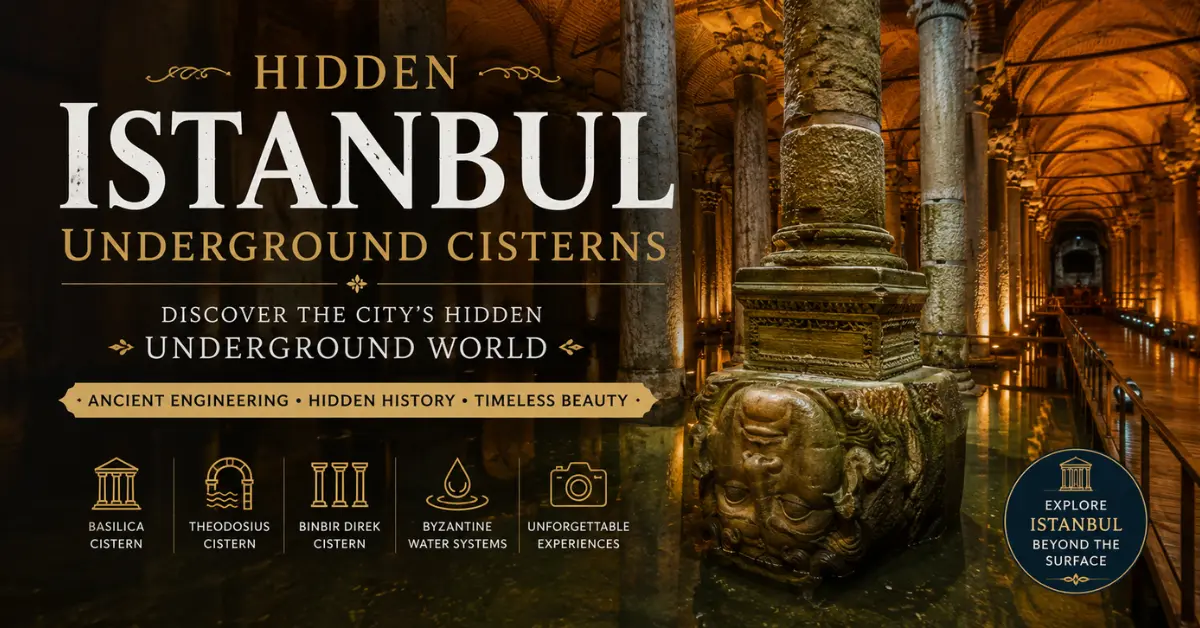
The Basilica Cistern is Istanbul’s most famous underground reservoir and one of the city’s greatest Byzantine engineering achievements. Built during the reign of Emperor Justinian I in the 6th century, it features 336 marble columns rising from shallow water, creating one of the world’s most atmospheric historical sites.
Visitors are captivated by the softly illuminated walkways, mysterious reflections, and the famous Medusa head column bases that have inspired countless legends.
Highlights
- 336 marble columns
- Medusa head sculptures
- Atmospheric lighting
- Byzantine engineering masterpiece
2. Theodosius Cistern (Şerefiye Cistern)
Often overlooked by tourists, the Theodosius Cistern offers a quieter experience while showcasing remarkable Roman and Byzantine architecture. Modern lighting and multimedia exhibitions bring the ancient structure to life without overwhelming its historic character.
Why Visit?
- Smaller crowds
- Excellent restoration
- Interactive exhibitions
- Beautiful stone columns
3. Binbirdirek Cistern
Despite its name meaning “One Thousand and One Columns,” Binbirdirek Cistern contains more than 200 impressive columns supporting massive brick vaults.
Once an essential water reservoir for the Byzantine capital, it now serves as a unique venue for exhibitions and cultural events.
4. Philoxenos Cistern
Known historically as the Cistern of Philoxenos, this remarkable underground structure demonstrates the scale of Constantinople’s sophisticated water management system.
Its elegant arches and stone columns continue to impress visitors centuries after its construction.
5. Open-Air Byzantine Cisterns
Not every ancient reservoir is hidden underground. Throughout Istanbul, visitors can still discover open-air Byzantine cisterns that once collected rainwater and supplied nearby communities.
These forgotten structures provide valuable insight into the city’s advanced hydraulic engineering.
The Engineering Behind the Cisterns
Supplying fresh water to a city of hundreds of thousands of people was an enormous challenge.
The Byzantine Empire constructed hundreds of kilometers of aqueducts that carried water from forests and springs outside the city into enormous underground reservoirs.
These cisterns stored water for times of drought, sieges, and daily public use, making them essential to Constantinople’s survival for centuries.
Many of these remarkable systems continued to serve Istanbul long after the Ottoman conquest.
Visitor Tips
- Visit early in the morning to avoid crowds.
- Wear comfortable shoes, as surfaces may be damp.
- Bring a camera with good low-light performance.
- Respect historical preservation rules.
- Combine your visit with nearby landmarks in Sultanahmet.
Why Explore Istanbul’s Underground World?
Most travelers admire Istanbul from its streets, mosques, and palaces, yet one of the city’s greatest wonders lies beneath the ground.
Exploring these cisterns reveals not only extraordinary architecture but also the ingenuity that allowed one of history’s greatest cities to flourish for centuries.
Whether you are passionate about history, archaeology, photography, or architecture, Istanbul’s underground reservoirs offer an unforgettable journey into the city’s hidden past.
Continue Exploring Hidden Istanbul
The underground cisterns are only one chapter of Istanbul’s hidden story.
Continue your journey through the Hidden Istanbul series to discover secret gardens, hidden cafés, forgotten Ottoman landmarks, breathtaking viewpoints, peaceful neighborhoods, and countless places beyond the traditional tourist trail.
Every hidden corner reveals another layer of Istanbul’s extraordinary history.